
Pinchos became one of Sweden's most profitable restaurants
How can bad service and food be successful?
Pinchos has long been unpopular among people in the restaurant industry: they use pre-made ingredients, lack a real service mindset, and customers have to pick up their own food. Yes, Pinchos breaks many of the basic rules that restaurant professionals are taught, such as the importance of traditional table service and quality ingredients, yet it remains one of Sweden's most profitable restaurant businesses. Why?
Sell more per employee
Personal %, the key to profitability
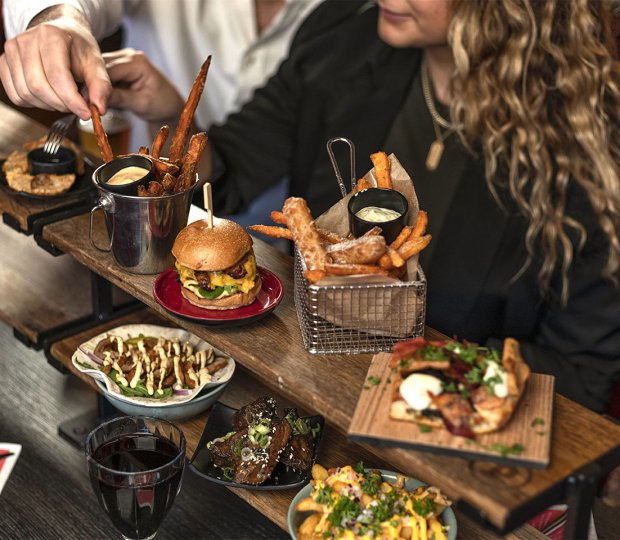
– Pinchos' concept is that we could save on staff, which is the biggest cost in a restaurant. That hasn't really happened. In the beginning, we were afraid of being known as the restaurant with bad service, so we hired about as many people as a regular restaurant. They just focused on other things, like helping guests. Today, our staff costs might be around 30-35 percent, while a regular restaurant's are 35-40 percent. It's not a huge difference. At the same time, we can have higher occupancy, as the time spent at the table is shorter with us.
Magnus Larsson, CEO Pinchos
The Pinchos app changed everything. The 1:1 ratio between how much you can sell and how much staff you have disappeared, and guests sat there sending in money directly from their phones.
The single most important factor for a restaurant's profitability is precisely how much you can sell per employee.
Of course, factors such as raw materials and rent play a role, but that is secondary. Even a restaurant with low margins, such as fast-food restaurants, makes good money because they have high volume per employee. Often, even “expensive” restaurants are significantly less profitable than fast-food restaurants. This is because each party requires a great deal of effort and service.
In industry jargon, the key figure is called staff%. Restaurants that allow guests to order and pay themselves, both at the table or for take-away, significantly reduce their staff%, and Pinchos has built a large company on this simple fact.
The Spanish restaurant company Pincho Nation AB made a profit of SEK 39.8 million in 2022, and its CEO earned SEK 163,670 per month in 2020. That's quite a bit different from what one is used to seeing in the restaurant industry.
Good margins
How can you get away with serving semi-finished products?
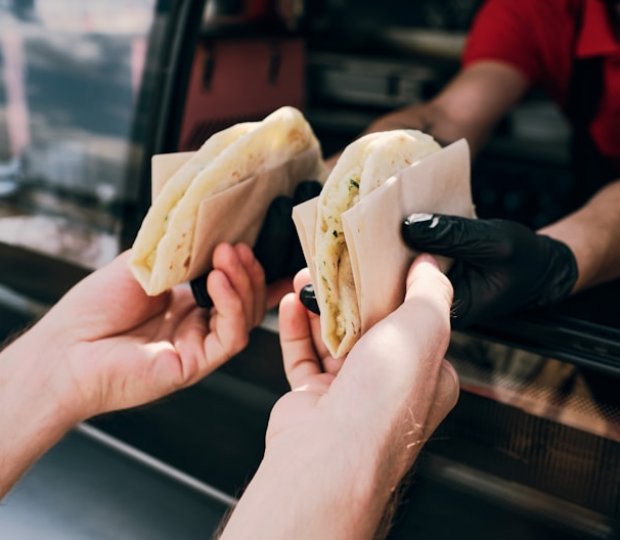
Logically, one shouldn't succeed in serving semi-finished products in the restaurant industry, but it turned out the premise was wrong. The focus for many guests isn't how it was prepared, but that it was fast and efficient. Furthermore, the presentation was well-thought-out and appealing. The experienced foodie might not eat at Pinchos, but a large portion of the population finds the simple flavors appealing and wants food that children will eat.
The semi-finished products made the cooking process incredibly efficient, saving hours, and the guest experience very smooth as meals were ready quickly at a reasonable price.
It turned out that for many, this was more important than how the food was prepared, and was a key to the smooth overall experience.

Target audience
Younger people and families with children liked Pinchos
Younger people and families with children found it nice to be able to order from their table and thereby avoid standing in line at the checkout or waiting for service.
Pinchos were very skilled and clear in their segmentation. They understood that younger people and families with children don't want to pay for old-fashioned traditional service.
Not because they are antisocial, but because they have a new view on service.
Agility is more important than waiting and talking to staff, and they hate standing in line.
Furthermore, they saw that most people are not at a restaurant to talk to staff, but to socialize with each other. Especially not if the staff is stressed or doesn't add any added value.
In Sweden, restaurants have about half as much staff per table as in, for example, France, which often does not allow time for good traditional service. This made Pinchos need to think outside the box, and this target group liked it.
A major success factor was also that younger people, especially young women, started sharing the “Instagram-friendly” food on social media. Advertising that comes for free and doesn't feel like advertising is incredibly effective marketing. Pinchos has also placed all its paid advertising on social media, where the key has also been to have a clear target audience.
Even though others than families with children and younger people later also found their way to Pinchos and appreciate the convenience, a big lesson for restaurants is to identify and market to a clear target group. Also that more people can later find their way to the restaurant.
Appen
The cash register is no longer needed
The app was initially met with skepticism and was a technical disaster with many teething problems. Pinchos even had to close its first restaurant in Marsstrand due to poor connectivity. In 2007, the technology was also not where it is today in terms of user-friendliness and simple payments.
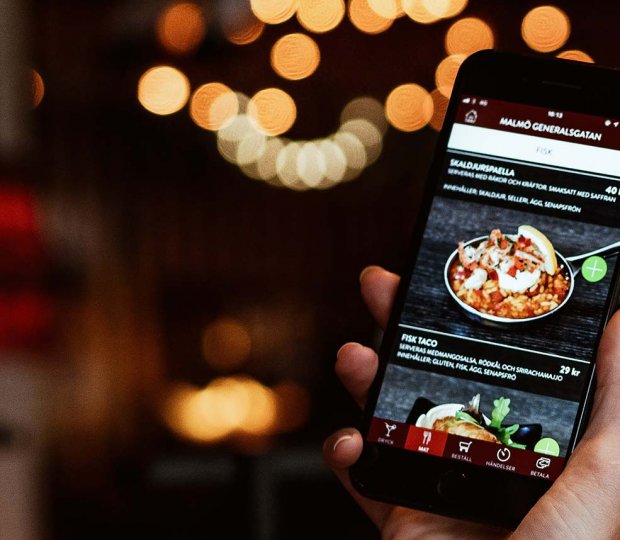
Later, the app became synonymous with Pinchos and people appreciated it. The smooth ordering and nice pictures ensured that guests ordered, and above all, ordered more than they would have without the app.
Pinchos' app currently has 3.8/5 stars on the App Store, which is average for the segment. There are now also more modern solutions where guests no longer need to download an app.
Now many checkout solutions have woken up and developed their own ordering solutions, but they are often too poor for guests comparing all apps to Instagram and Spotify which have thousands of developers.
Therefore, many restaurants today have tested “QR codes” but have not succeeded in increasing profitability. The POS systems are happy about it too, as it does not threaten their profitable business model of selling hardware and leasing cash registers with long-term contracts.
But there are alternatives. There's now a new generation of payment solutions. The focus is on creating smoother guest experiences and more profitable restaurants, rather than pushing hardware to restaurants and locking them into long-term contracts. As guests get used to ordering for themselves—8 out of 10 even find it smoother—the industry will benefit from being able to handle more tables and orders per staff member. This also comes from selling more when guests can buy more at any time with automated upselling. Simply put, more money for the restaurant and less for the cash register systems.
The trend of QR code ordering, even outside of Pinchos, looks like it's here to stay, as more and more guests are getting used to ordering themselves and appreciate it.
Even restaurateurs who themselves prefer traditional service are now saying it's the future. Regardless of how they feel about the industry changing, they realize that both restaurant owners and guests have a great deal to gain by thinking differently. Not to copy Pinchos, but rather to embrace their courage to think outside the box.
Much of the problems in the restaurant industry, such as low wages and poor working conditions, can be attributed to low profitability. With an average of 3% in the industry, there is enormous potential to become more profitable.
We are now on the third generation of our technology, which will allow us to completely remove physical checkouts. All the expensive checkout systems sold to our industry are no longer needed.
Great service
We've helped restaurants go from 3% to 15% profitability when they can serve more per staff. It can change a lot in a restaurant owner's life.